The Ga Mantse, King Tackie Teiko Tsuru II, on Saturday led a historic spiritual journey to the ancestral burial grounds of Ga traditional rulers at the King Tackie Tawiah Royal Mausoleum, Tesano, as part of the 2025 Homowo Festival rituals.
The sacred rite, known as Maamε—literally meaning “a journey to the ancestral burial grounds”—is a tradition reserved solely for the Ga Mantse. It is performed exactly one week after the annual Homowo celebrations.
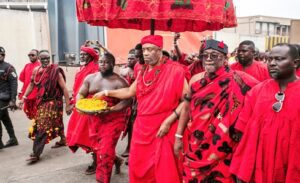
This year’s ritual was performed under heavy police and military presence, accompanied by chiefs, queenmothers, Asafoatsemei and Asafoanyemei, and thousands of Ga indigenes who thronged the streets in red attire to mark the climax of the festival themed:
“Our Heritage Won for Us Through the Blood and Toil of Our Fathers Will Never Be in Vain.”
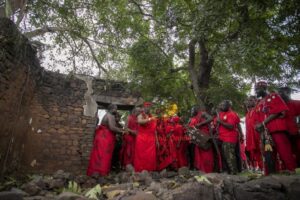
Traditional Rites and Prayers
Moving solemnly from tomb to tomb, King Tackie Teiko Tsuru II performed sacred rites that included sprinkling kpokpoi, pouring libation with schnapps and water, and offering intercessory prayers for blessings, protection, good health, strength, and prosperity for the Ga people.
At the royal mausoleum, he first stopped at the tomb of Nii Tackie Tawiah I, the first King of the Ga State, who was buried underground. The King performed rituals in the sacred chamber before proceeding to honor other departed royals.
The monarch later visited Adabraka’s old royal cemetery and the statue of King Tackie Tawiah at Makola Market, where final rites were performed to conclude the over eight-hour ceremony.
The day was filled with traditional drumming, dancing, musket firing, chants, and jubilation, climaxing in a majestic procession from the Accra Brewery burial site through Agbogbloshie to Makola, and back to the Paramount Stool House in James Town.
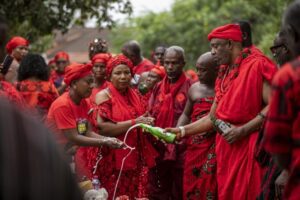
Spiritual and Cultural Significance
The palace storyteller, Nii Kwardey Ntreh, explained that the custom honours the spirits of departed kings, who are believed to continue living among the people.
“We sprinkle kpokpoi, drinks and water because we believe their spirits are still around us. Beginning and ending the rites at Nii Tackie Tawiah I’s tomb is symbolic—it is respect to the first King of the Ga State,” he said.
The rituals, he added, renew the bond between the living and the departed, reinforcing unity and spiritual protection for the Ga people during and after the Homowo.
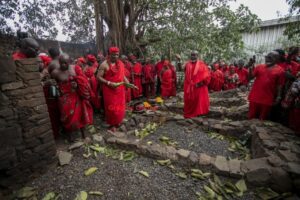
Preparations and Cleansing Rites
By 8 a.m., chiefs, queenmothers, family heads, and loyal subjects from the seven principal Ga clans—Gbese, Asere, Abola, Otublohum, Sempe, Ngleshie, and Akunmaajen—gathered at the Paramount Stool House.
As tradition dictates, the Shipi of the Ga State lit a sacred fire at the palace entrance, and the King walked through the smoke for spiritual cleansing before setting out. Similar cleansing rituals were performed at cemetery gates.
At the close of the ceremony, a traditional priestess presented a wooden basin (sese) filled with sacred water and leaves, believed to wash away misfortune and grant blessings.
Solidarity and Messages of Unity
Notable chiefs and queenmothers, including Abola Mantse Nii Ahene Nunoo II, Abola Manye Naa Okaitsoe III, Sowutuom Mantse Nortse Nii Nortey Owuo IV, and Teiko Tsuru We Manye Naa Amerley Tesaa I, attended the ceremony.
Naa Amerley Tesaa, who sat on her late mother’s tomb, prayed for personal blessings, while Naa Lamiley Ajaaku Dromo II urged unity among the Ga people:
“We must learn to tolerate one another and embrace love and unity. Only then can we progress as a people.”
Key Takeaway
The 2025 Homowo ancestral rites reaffirm the Ga people’s deep spiritual traditions, highlighting a bond between the living and the departed. The Ga Mantse’s prayers and rituals were not only a mark of respect to past rulers but also an intercession for collective blessings, peace, and prosperity for the Ga State.
Source: Trendz Gh
About The Author