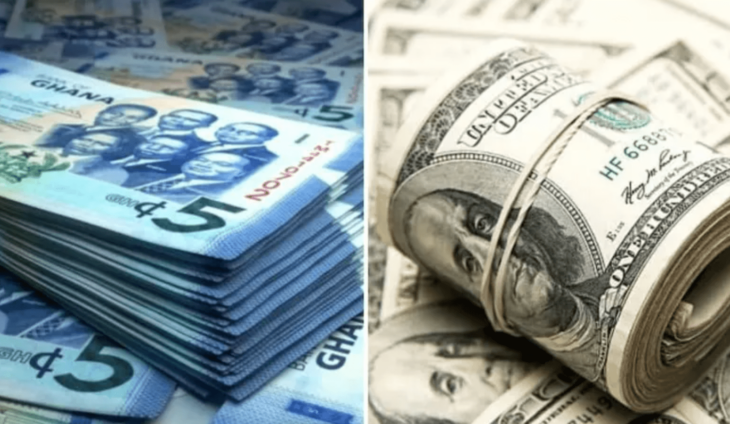
The Bank of Ghana (BoG) has reduced both the size and frequency of its foreign exchange interventions, following concerns raised by the International Monetary Fund (IMF) over the central bank’s heavy market presence.
During the second quarter of 2025, the BoG injected over US$2 billion into the forex market in an effort to stabilize the cedi. However, the IMF cautioned the regulator to exercise restraint, warning that excessive interventions could distort the foreign exchange market.
By the end of July 2025, the central bank’s actions had eased significantly. Data shows that total foreign exchange forward sales for July stood at US$822.8 million, representing a 53.6% decline compared to June. Notably, the BoG was absent from the market on July 25 and July 29 — the first time since April.
This reduced activity created tighter forex supply conditions, resulting in a 1.7% cedi depreciation against the US dollar following the IMF Board’s approval of Ghana’s program.
Analysts Project Cedi to Weaken Gradually
Financial analysts at IC Research noted that the move was necessary to avoid sustaining an “over-valued” exchange rate and to help close arbitrage gaps within the market.
“In view of the need to avert a protracted over-valued FX rate and close the arbitrage gap, we expect the BoG to continue the gradual softening of its presence in the forex market,” the firm said.
According to IC Research, the cedi is projected to trade between GH¢10.45 and GH¢11.45 per dollar (midpoint GH¢10.95/USD) by the end of 2025.
Real Effective Exchange Rate Points to Modest Depreciation
The report further highlighted that Ghana’s Real Effective Exchange Rate (REER) shows signs of corrective depreciation ahead. The REER index declined sharply by 31.3% in the first half of 2025, reaching 92.7 points in June.
This development reflects the sharp appreciation of the cedi earlier in the year, which created multiple exchange rates. While the interbank rate averaged around GH¢10 per US dollar, retail traders quoted as high as GH¢12 per dollar.
Outlook
Economists believe the BoG’s decision to scale back its interventions is a strategic attempt to allow market forces to dictate the exchange rate more sustainably, while also aligning with IMF recommendations under Ghana’s ongoing economic recovery program.
If current trends persist, the cedi is expected to see a gradual and non-disruptive depreciation in the second half of 2025, restoring balance in the forex market.
Source: Trendz Gh
About The Author